








- Swaps
- Swaptions
- Constant Maturity Swaps (CMS)
- Cap/floors
Data from the world’s largest interdealer broker
Overcome the challenges of opacity in OTC markets, with independent financial market data sourced from the world’s largest interdealer broker, TP ICAP, and other leading liquidity venues.
Data sourced from leading brokerage brands
The Parameta Solutions Difference
-
Data from the world’s largest IDB*
As the exclusive provider of TP ICAP data, the world’s largest inter-dealer broker (IDB) we deliver an independent, unconflicted and unique view of global trading activity, reflecting real‑world pricing and supporting stronger price discovery.
* By revenue, source TP ICAP earnings report 2025 -
Coverage across 200+ product types
We provide deep coverage across 1 million+ global over-the-counter (OTC), cash and derivative markets including interest rates, FX, money markets, energy and commodities to help you manage large, sophisticated portfolios.
-
Accurate, real-world data sets
We transform sparse, hard-to-price instruments into comprehensive, consistent datasets for accurate price discovery and effective risk management.
-
Real-time pricing & long historical datasets
We provide real‑time, intraday snaps, end-of-day data and large, high-quality historical datasets of up to 30 years for modelling and back testing trading strategies.
-
Data delivered -how & where you need it
Seamless and secure data delivery direct, via cloud providers or via your preferred third party platform.
-
Strong data governance
Our data goes through multiple layers of quality control before it reaches our customers to ensure the highest levels of quality and accuracy.
Our Awards
Market Data Coverage

Interest Rates


Money Market
- Repos (General Collateral & Specials)
- Treasury bills
- Cash deposits
- Lending rates
- Commercial papers
- Certificates of deposit

Fixed Income
- Sovereign debt
- Government
- US Treasury on & off the run
- Mortgage backed securities (MBS)
- Structured debt




Energy & Commodities
- Oil (full barrel)
- Power
- Gas
- Coal
- Emissions
- Precious, battery & base metals
Clearer insight into opaque markets
Parameta Solutions provides trusted over the counter (OTC) market data that helps market participants see what’s really happening beyond the exchanges. Traders, risk managers, quantitative analysts, and compliance teams rely on our data to make faster, better‑informed decisions in complex markets.
Much institutional trading takes place over the counter, where liquidity is fragmented and transparency is limited.
Parameta Solutions brings clarity to this environment by sourcing high‑quality data directly from TP ICAP, the world’s largest inter-dealer broker, alongside other leading trading venues. This gives you access to real‑world negotiated prices that are not visible elsewhere.
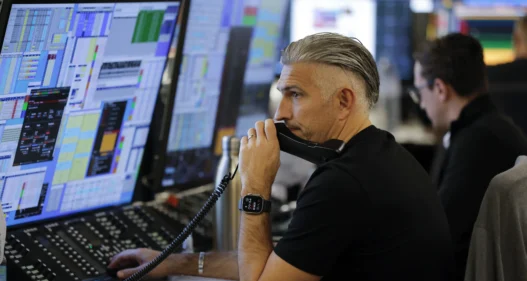
With deep expertise in capital markets—particularly interest rate derivatives and volatility products—we deliver a consolidated, real‑time view of OTC activity.
Our data helps you track price movements as they happen, identify trading opportunities, and adapt quickly to changing market conditions, even for illiquid or hard‑to‑price instruments.
Parameta Solutions supports the full trading lifecycle. We provide surveillance reports for compliance teams, trading analytics to monitor best execution and off‑market activity, and a range of benchmark and indices products.
The result is greater transparency, stronger models, more robust trading platforms, and the confidence to act in markets that were once opaque.
Other data solutions

Transaction Cost Analysis
Compare your executed trades with data provided by TP ICAP’s global broker dealers to help you achieve best execution and support regulatory reporting.

Order surveillance
We provide a unified view of individual trader actions for robust monitoring and analysis.
Three easy ways to connect to our data

Direct
Instant access through API or SFTP channels.
Cloud delivery
Access via our cloud partners such as Snowflake and AWS.
Channel partners
Connect via our extensive network of partners including LSEG, Bloomberg, S&P & ICE.
OTC data solutions tailored for every role
Traders
Identify arbitrage opportunities, manage positions, and execute trades with confidence.
Quantitative Analysts
Build & enhance your model performance, drive algo strategies & uncover market signals faster.
Risk managers
Track exposure, run stress tests, and ensure compliance using accurate, up-to-the-minute market data.
Compliance
We provide time-stamped data for post-trade analysis, regulatory reporting, and maintaining a defensible audit trail.
The numbers speak for themselves
1
m+
instruments
200
+
asset types
200
+
sourced from broker desks worldwide
Get your data sample
Complete the form and tell us which asset class/instrument you would like to see.

Latest Insights

Inflation & Interest Rates
Inflation curves show why the headline number is only part of the story

Regulation, Compliance, and Risk
Independent Price Verification (IPV): building a defendable view of the market

Inflation & Interest Rates